Apolo
Methodology
Design Thinking
Rol
UX UI Designer
Date
2024
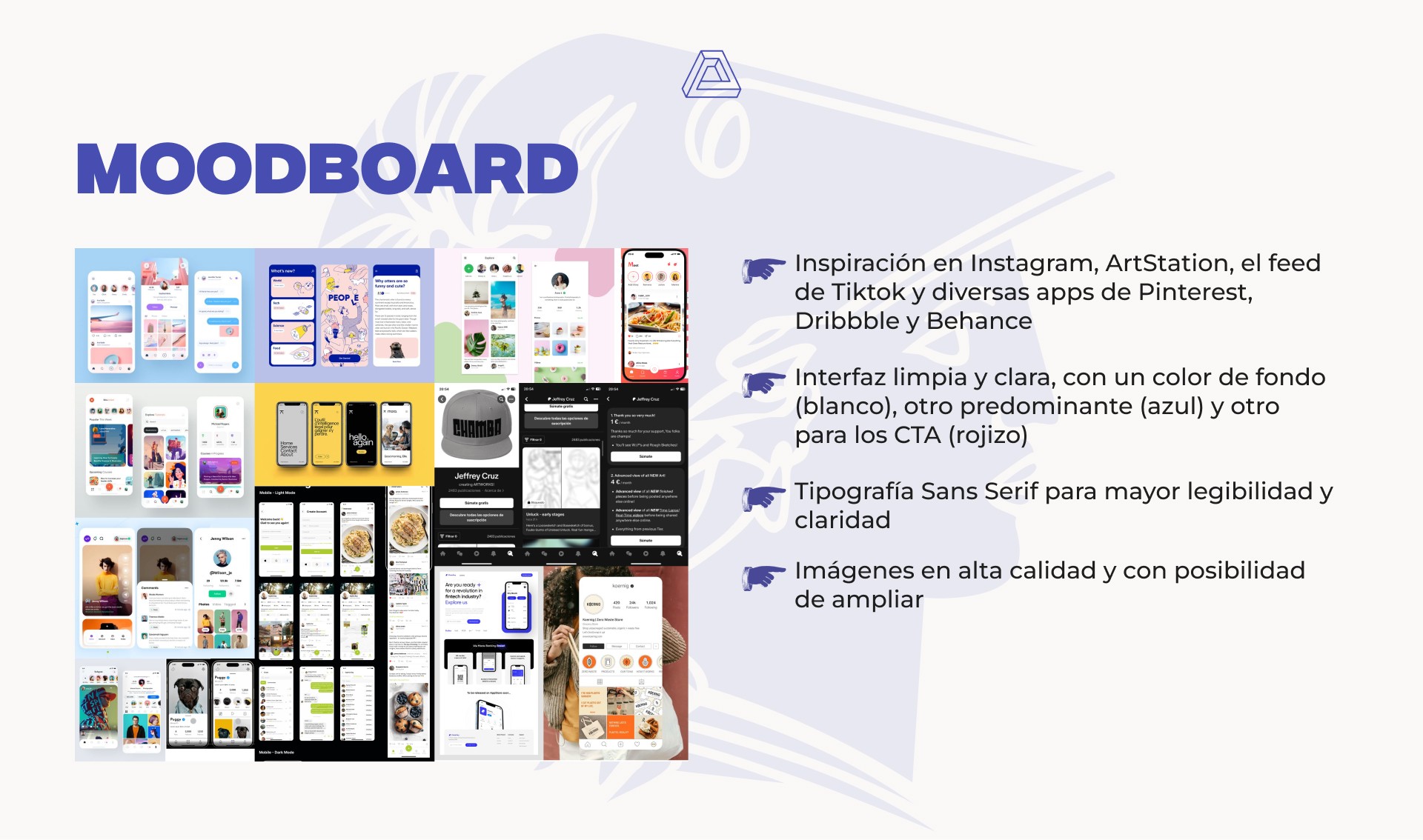
In order to understand the needs and behaviour of artists, I developed diferent activities such as Desk Research, Netnography analysis, a personal interview with a working concept artist and a survey. I also worked on a Benchmarking, in order to know the possible competitors and their strong points and weaknesses, and a SWOT analysis
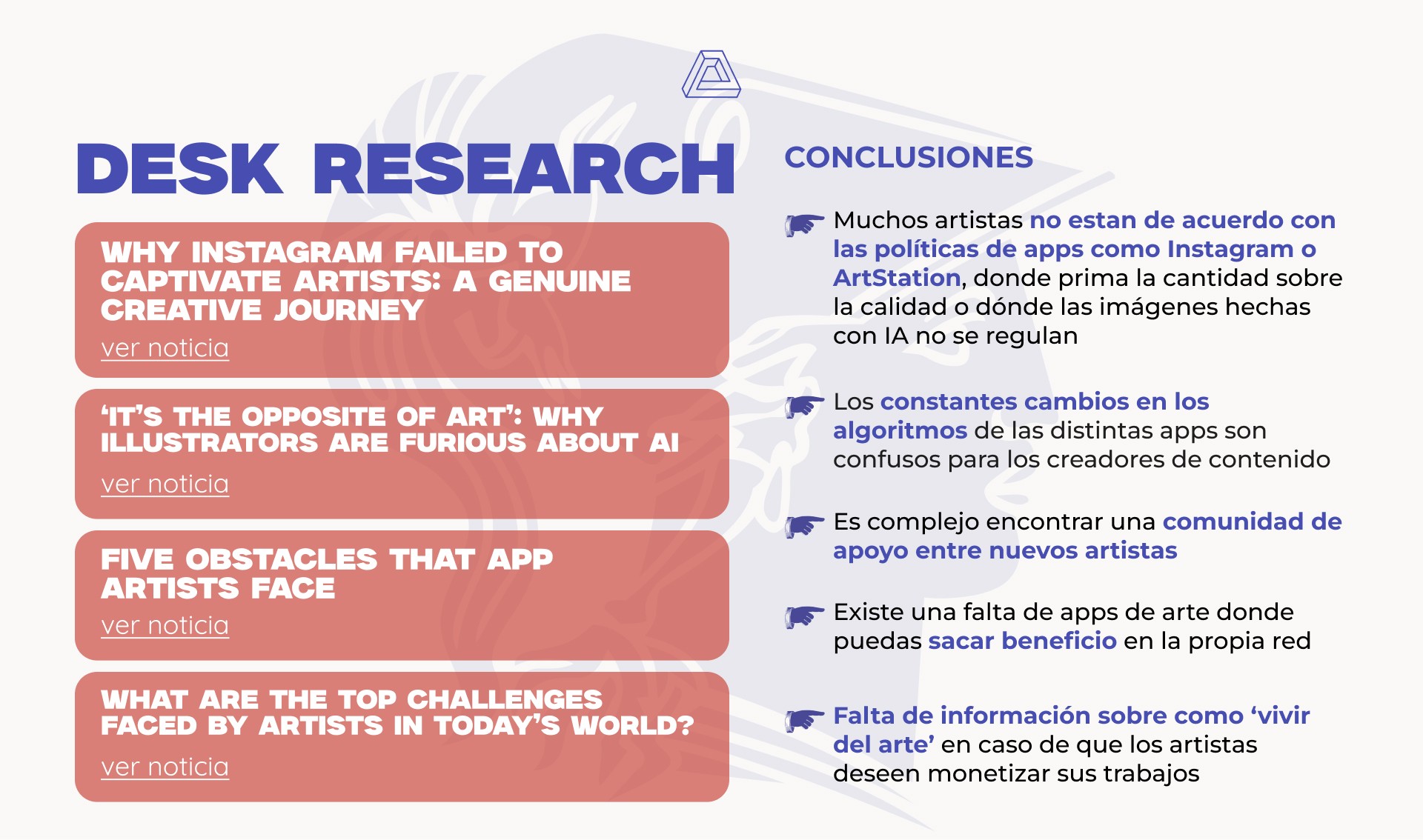
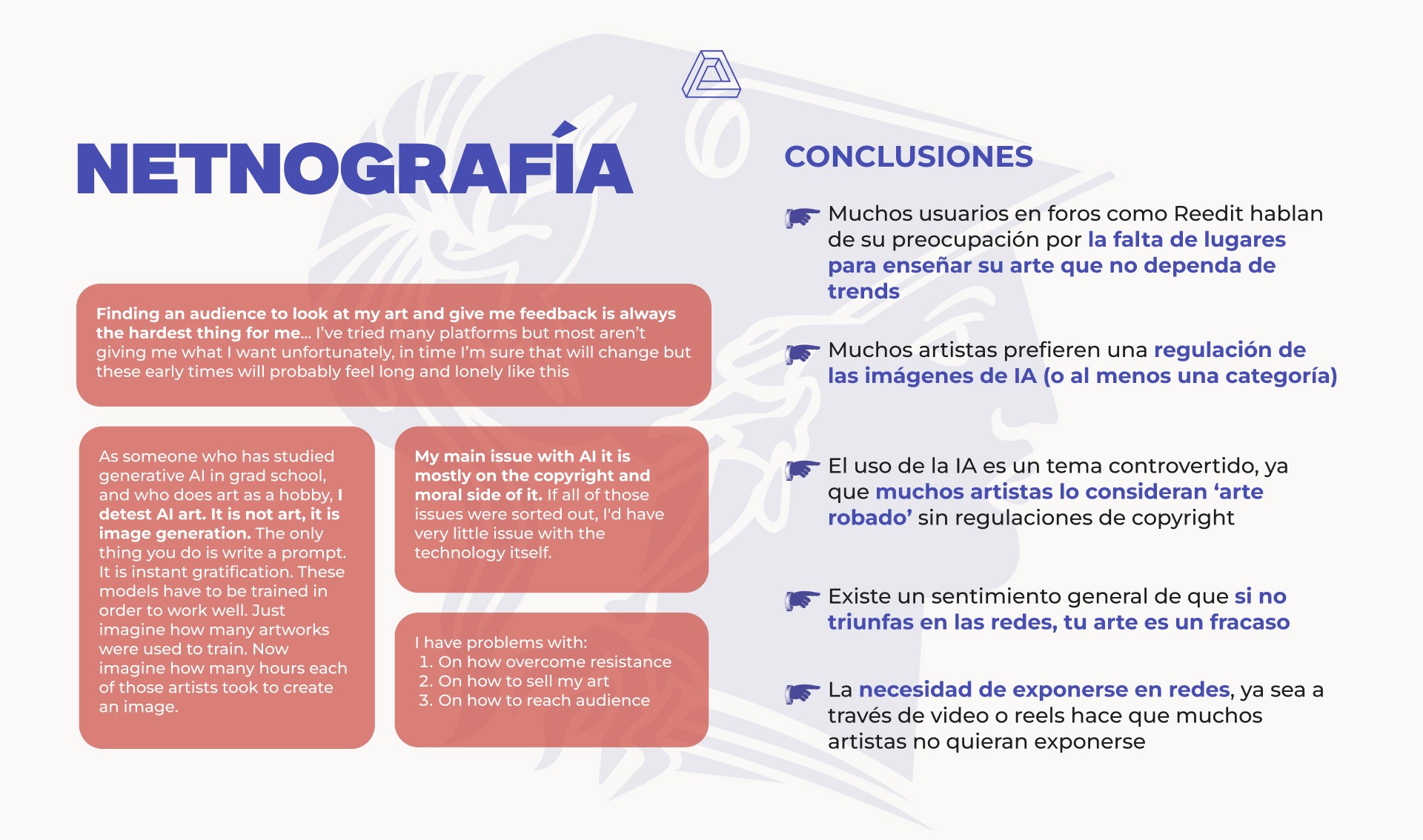
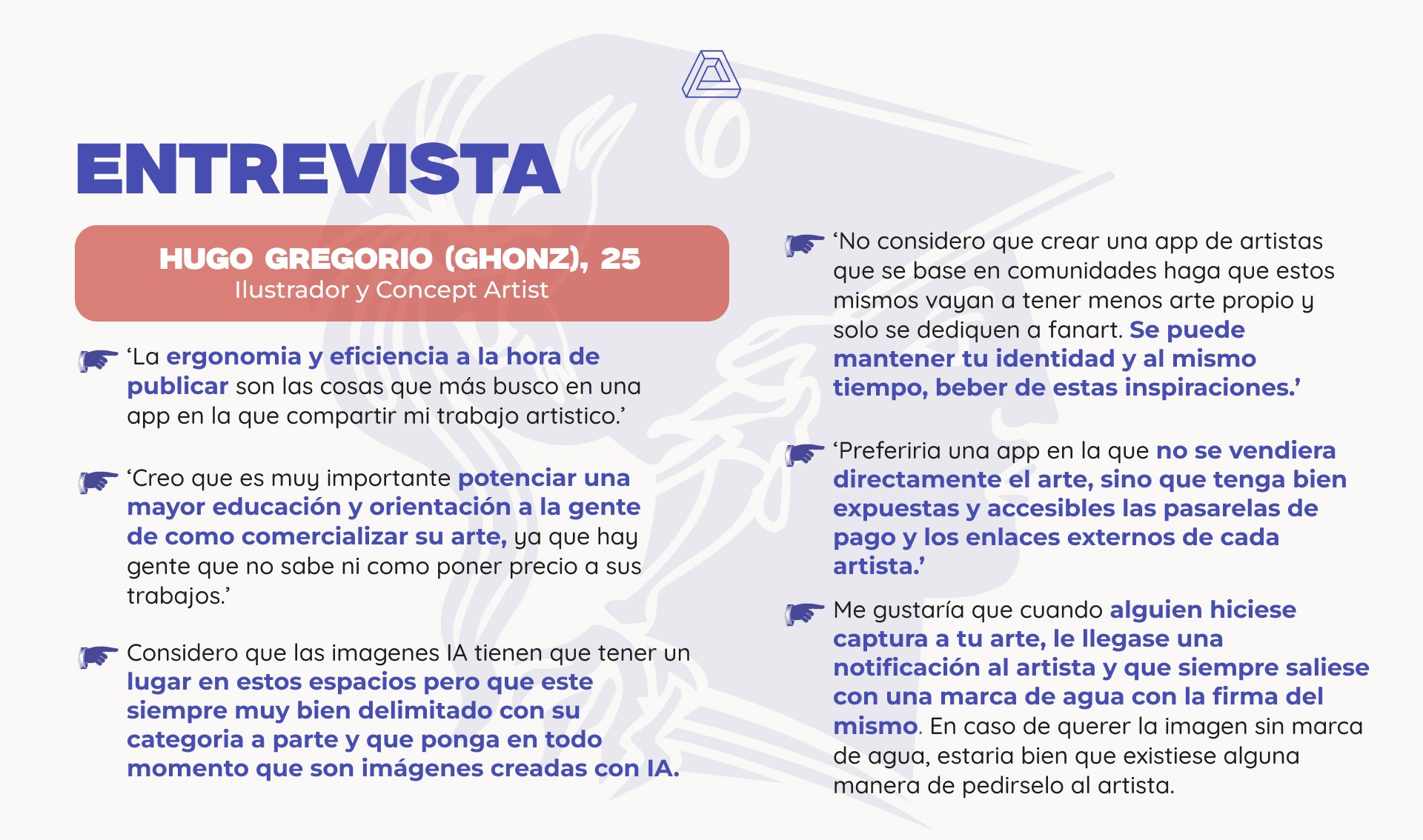
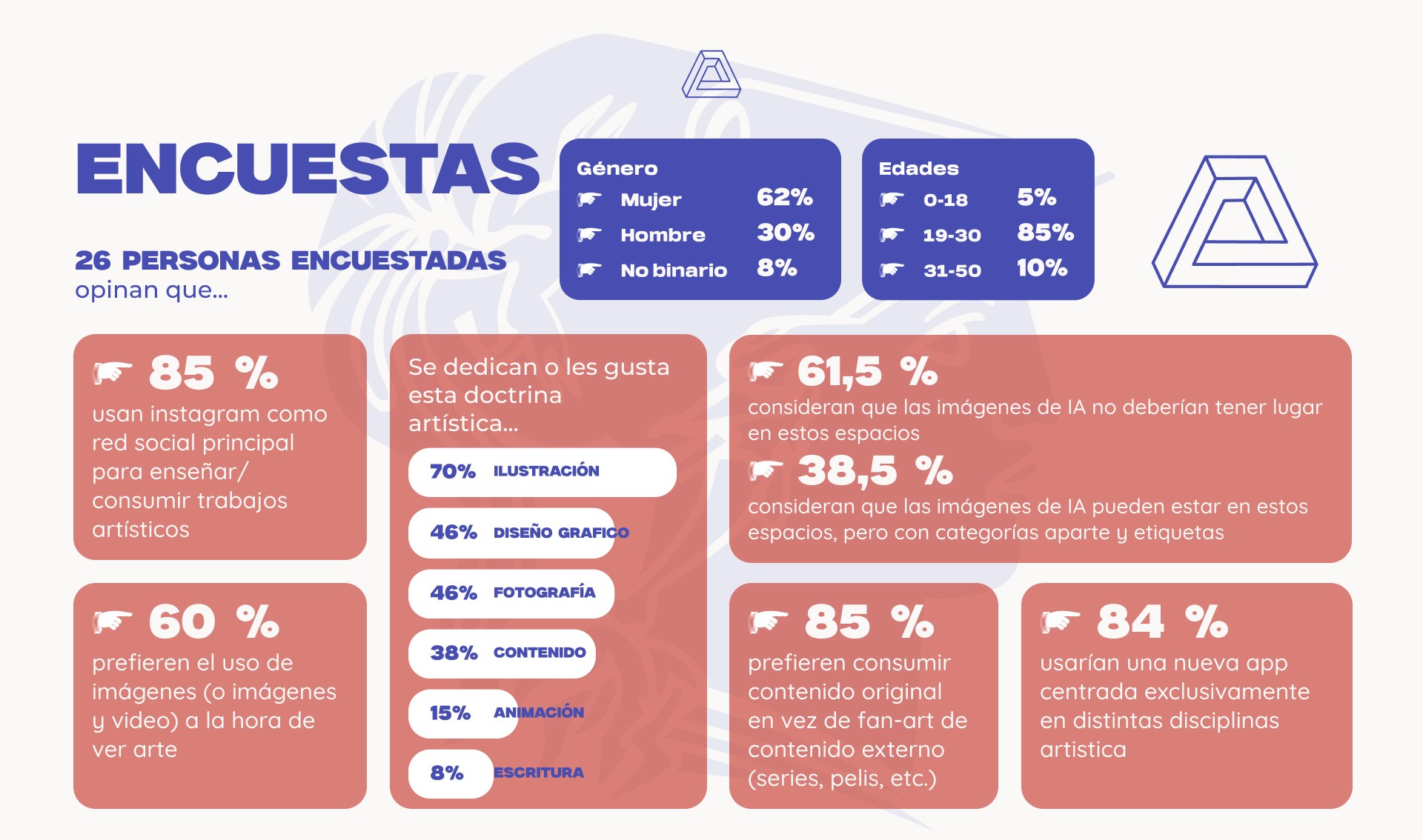
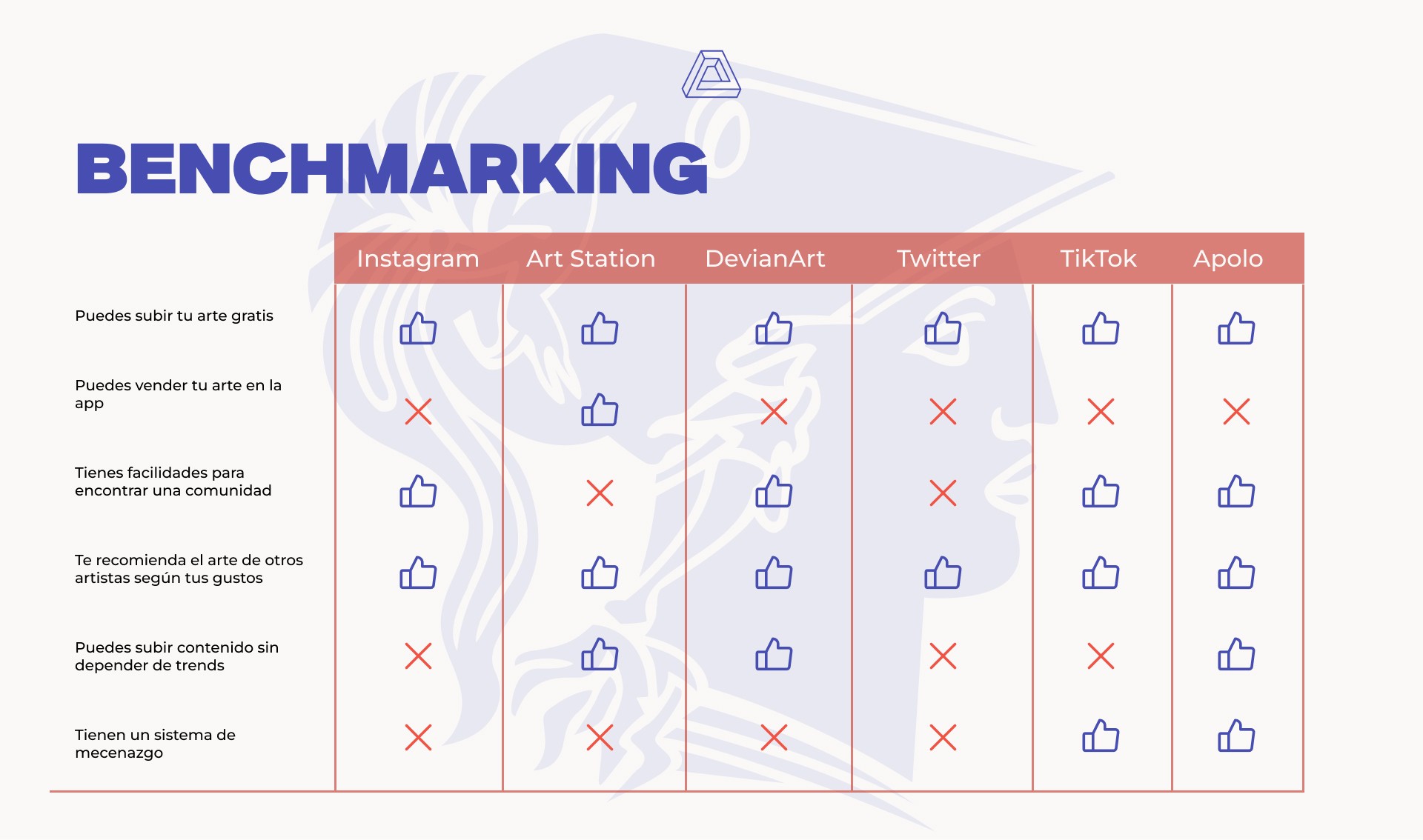
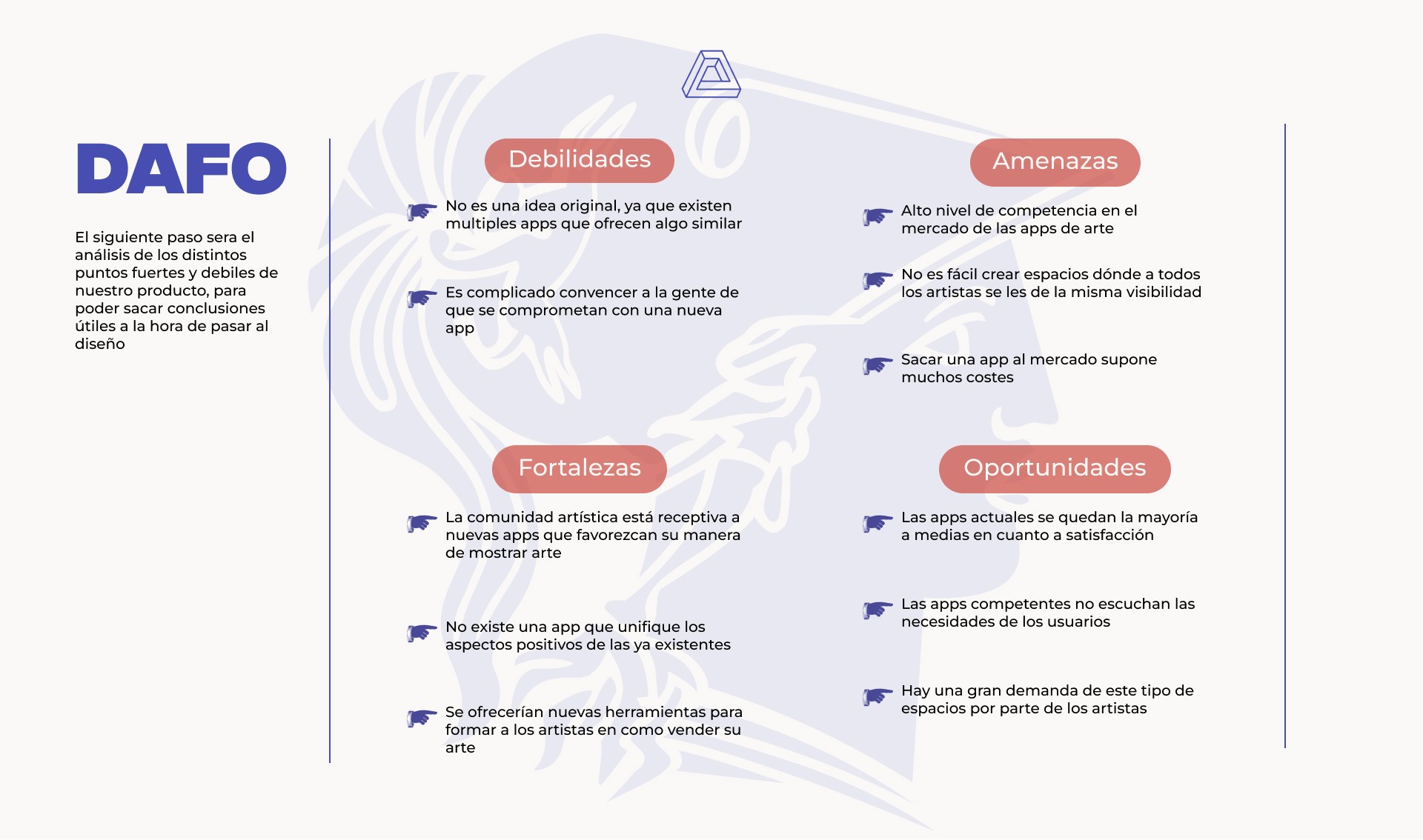
The conclusions of the investigation were: a necessity for an space that priorize artist made content, with a consistent algorithm and a protection for artists rights with the use of watermarks.
After the observation phase, where we delved into the beliefs of real users, we constructed a hypothetical User Persona to gain deeper insights of our audience. Additionally, we delineated the needs of this hypothetical user and mapped out the customer journey they might undertake.
This process facilitated an understanding of our target demographic, enabling us to tailor our design solutions effectively.
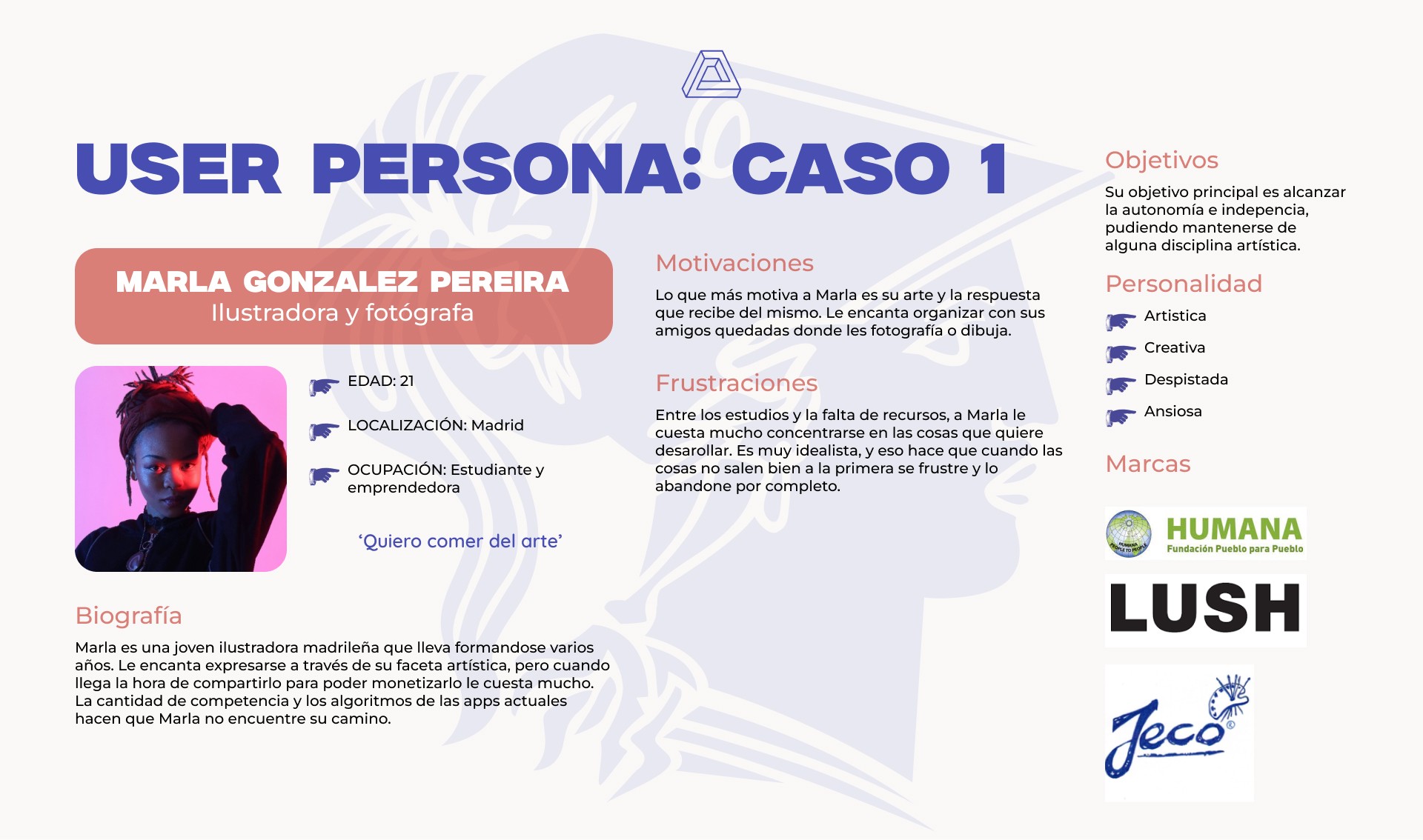
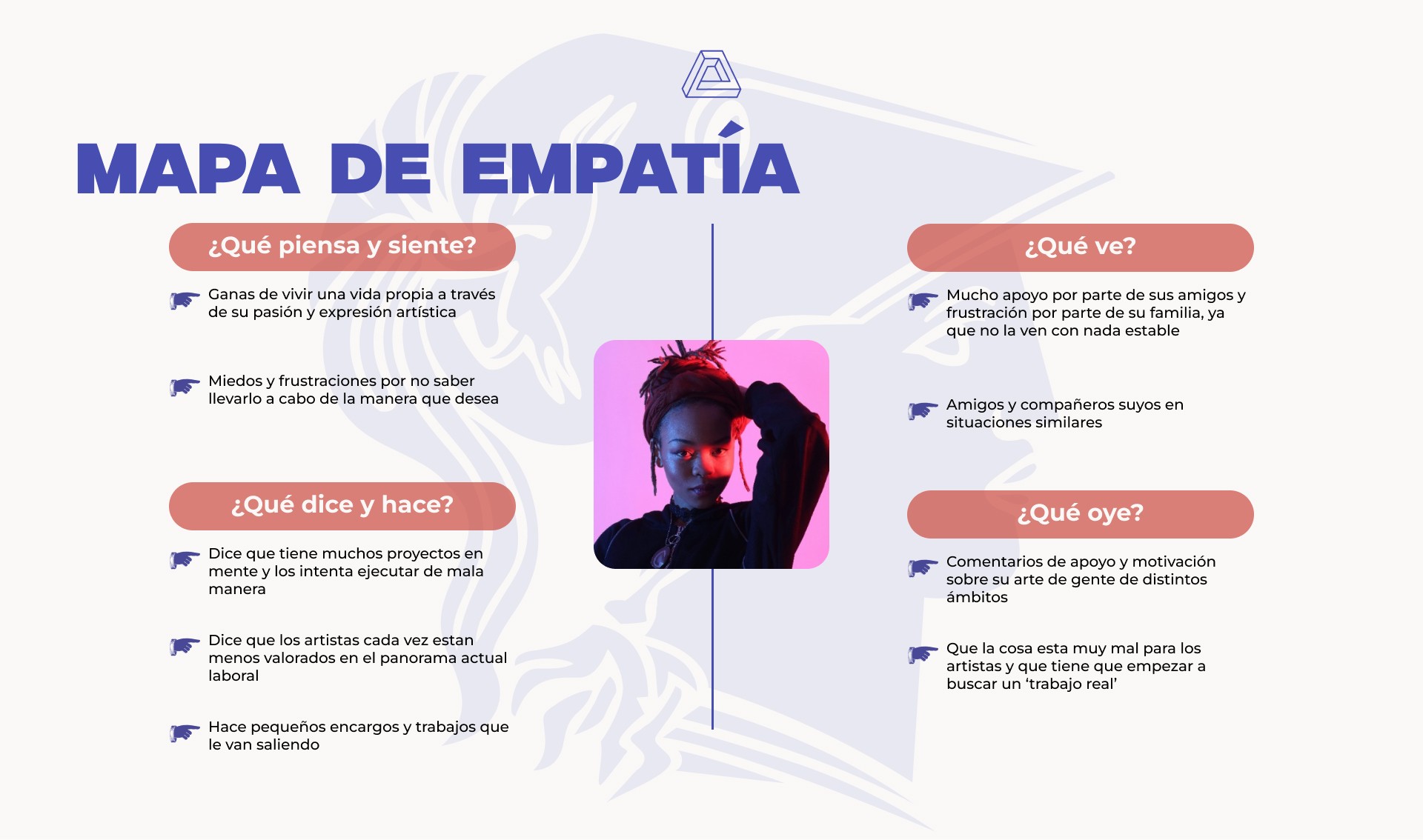
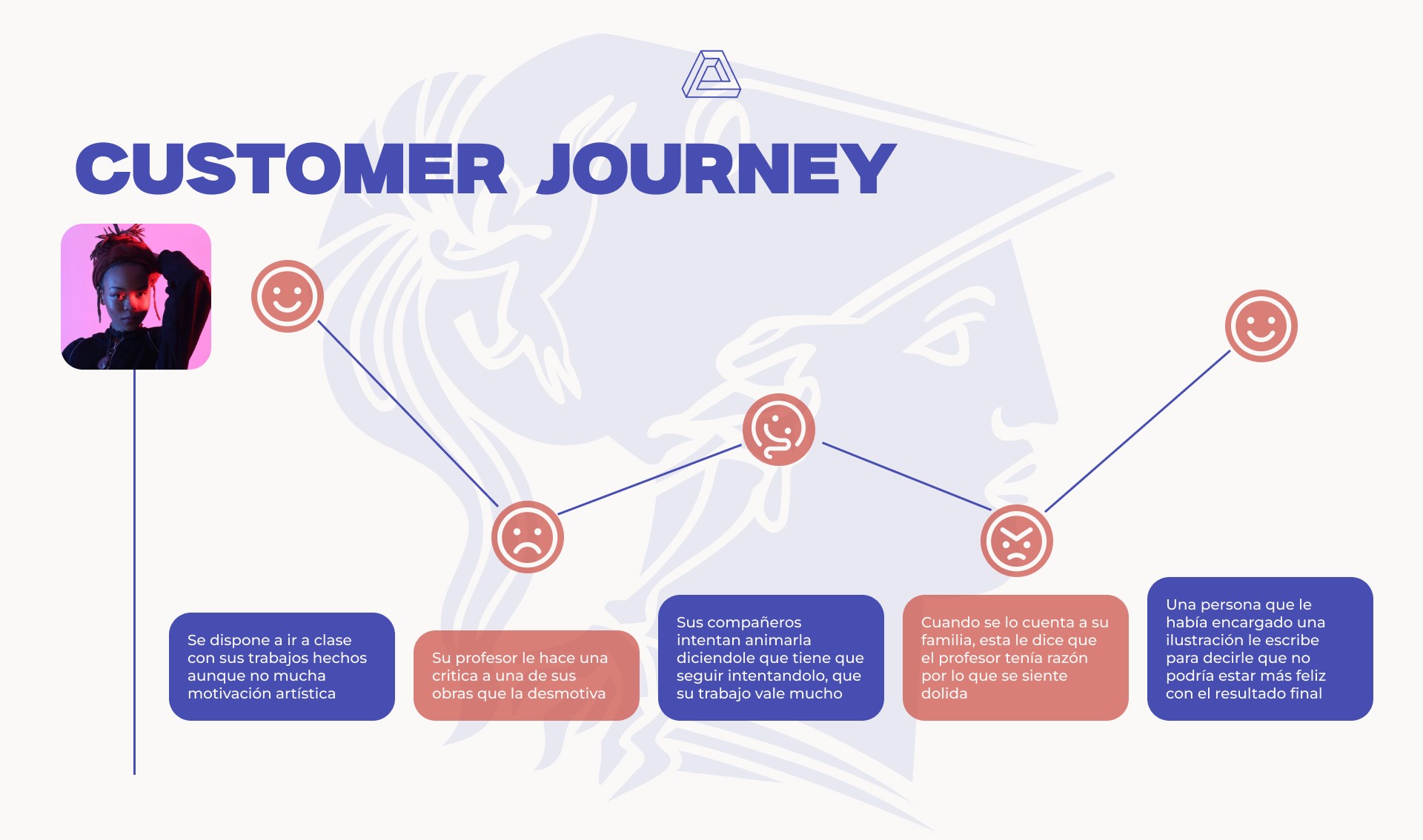
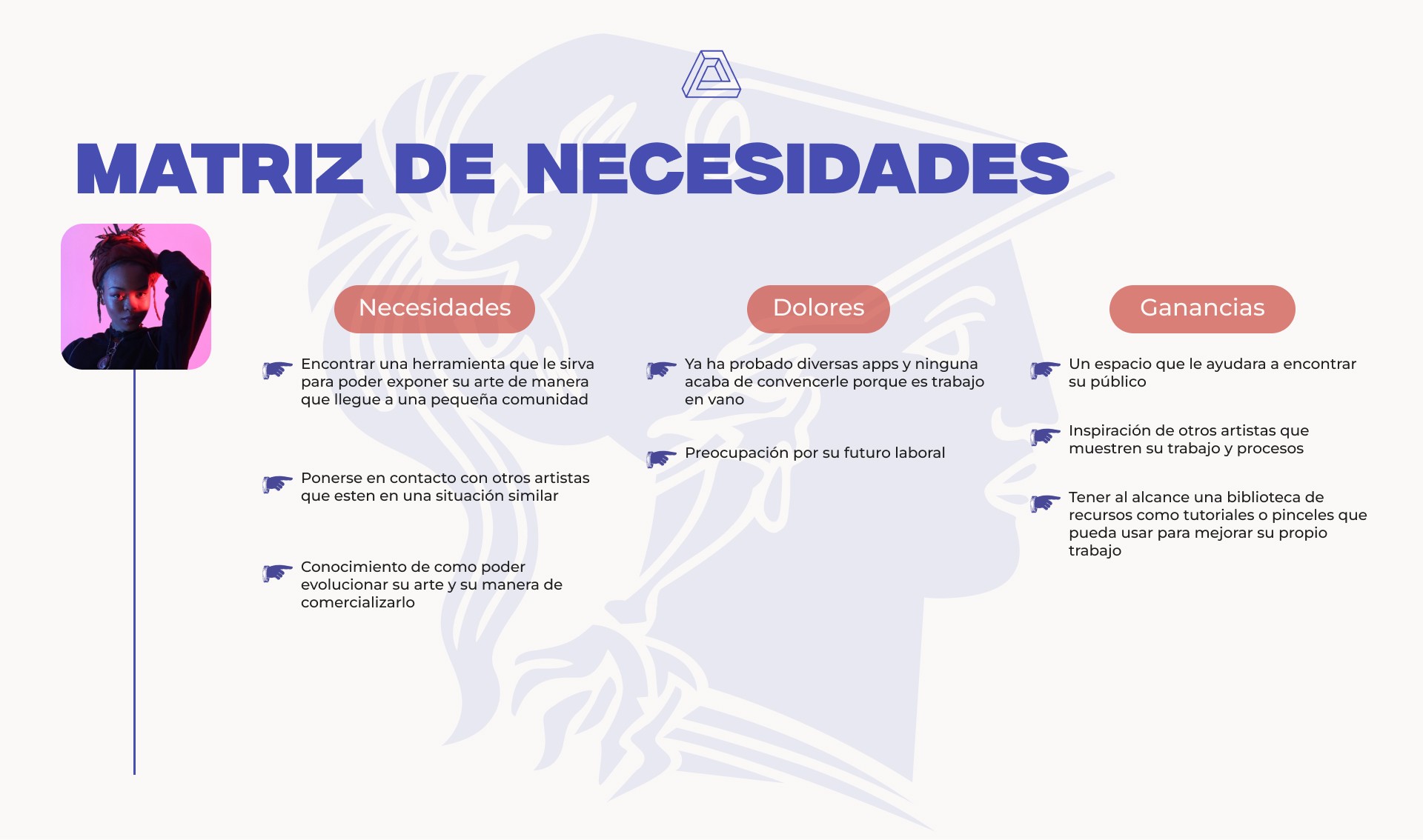
Some of the conclusions after the define part where: Artists need a platform that is easy to navigate and visually highlights their work. Users want features that allow for meaningful interactions, such as commenting, sharing, and networking.
The platform should support various forms of art, from traditional to digital, including 3D animation, illustration, photography, and fashion.
In this phase, we thoroughly evaluated the most promising features for our app. Utilizing methodologies like the 'MoSCoW' technique, we refined our choices to select the optimal ones. Employing marketing tools such as Benchmarking (to assess our competitors), SWOT analysis, and the Value and Business Proposition Canvas, we gained deeper insights into our market positioning.
These analytical tools were instrumental in understanding our competitive landscape and defining our value proposition within the market.
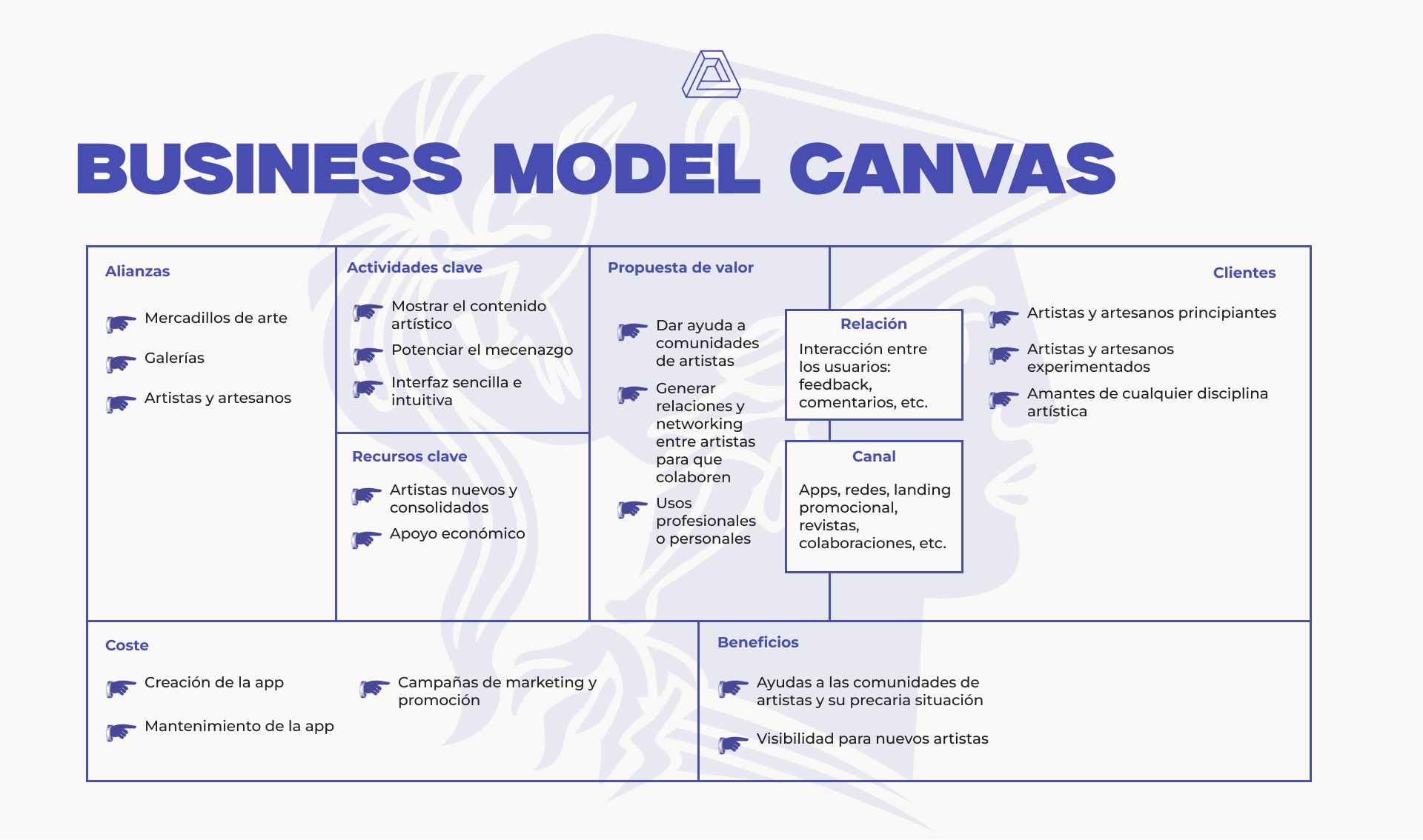
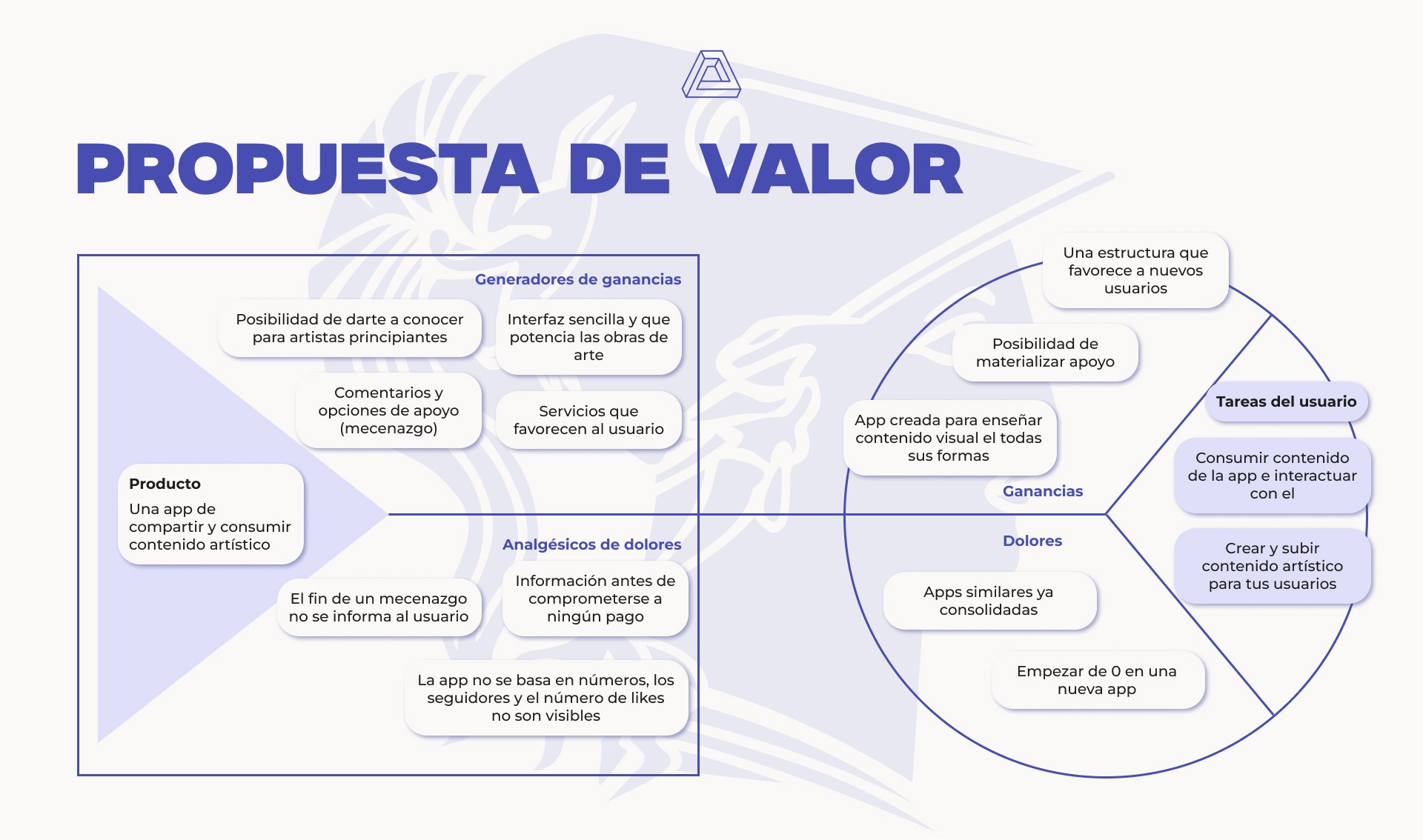
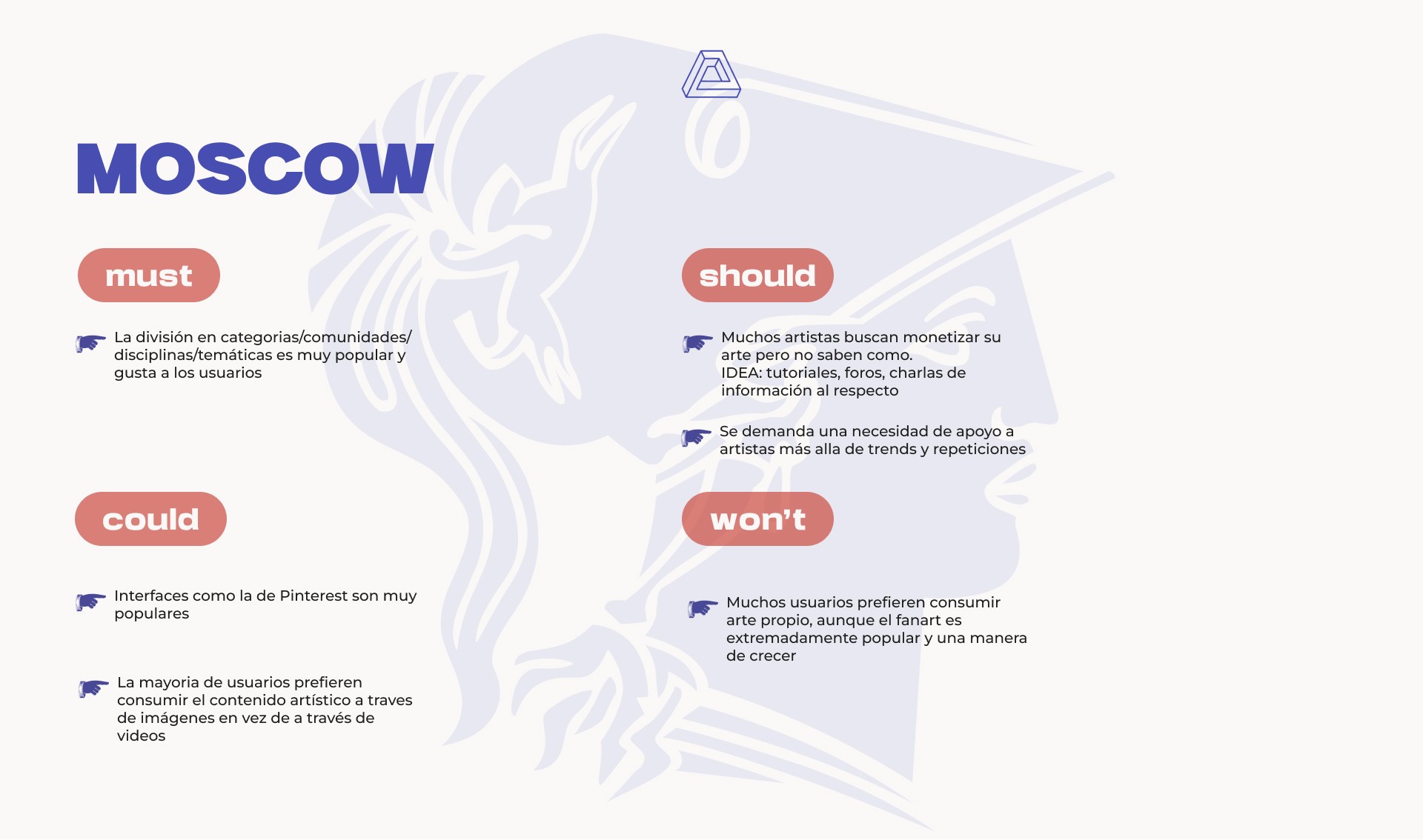
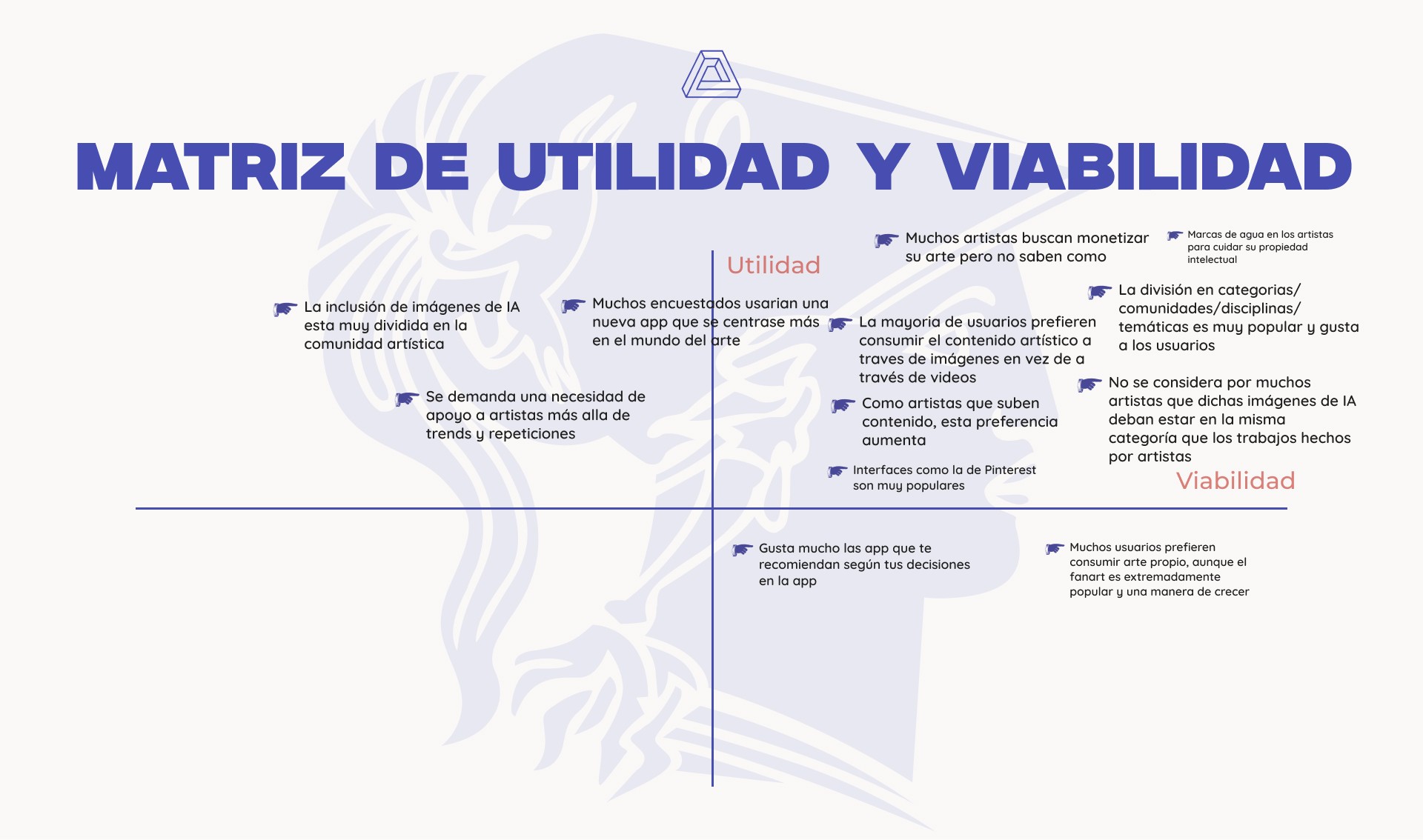
In conclusion, there is a need for a clean, intuitive interface that prioritizes artists' work, coupled with responsive design to ensure a seamless experience across all devices. Incorporating social media features like following, commenting, and sharing can foster community engagement. Additionally, providing tools for artists to network, collaborate, and receive feedback on their work is essential. Lastly, a personalized feed showcasing trending and recommended artworks would enhance the user experience.
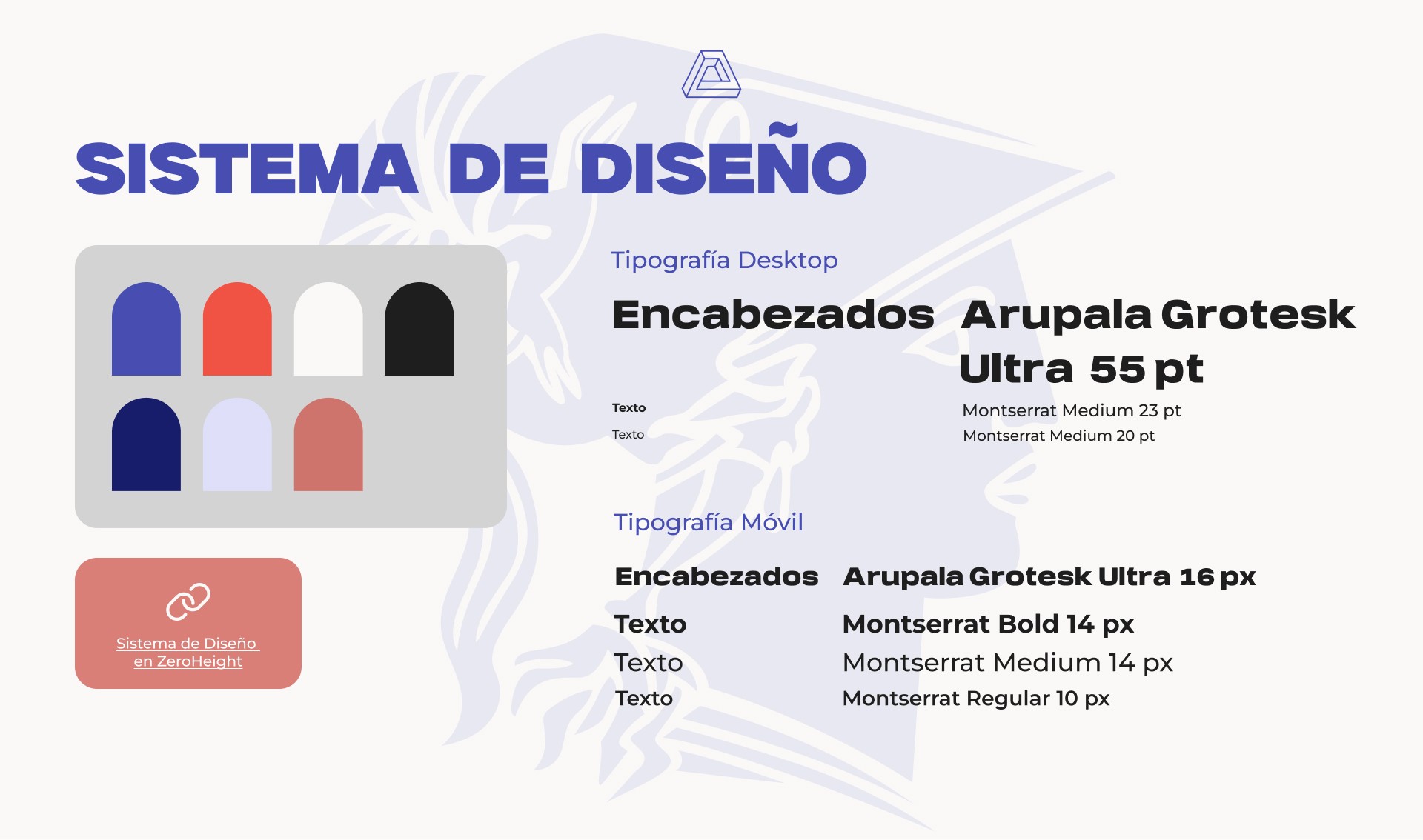
In the final phase, the design stage, I created wireframes and prototypes to test the initial design, gathered feedback through user testing in Maze, and developed a high-fidelity prototype.
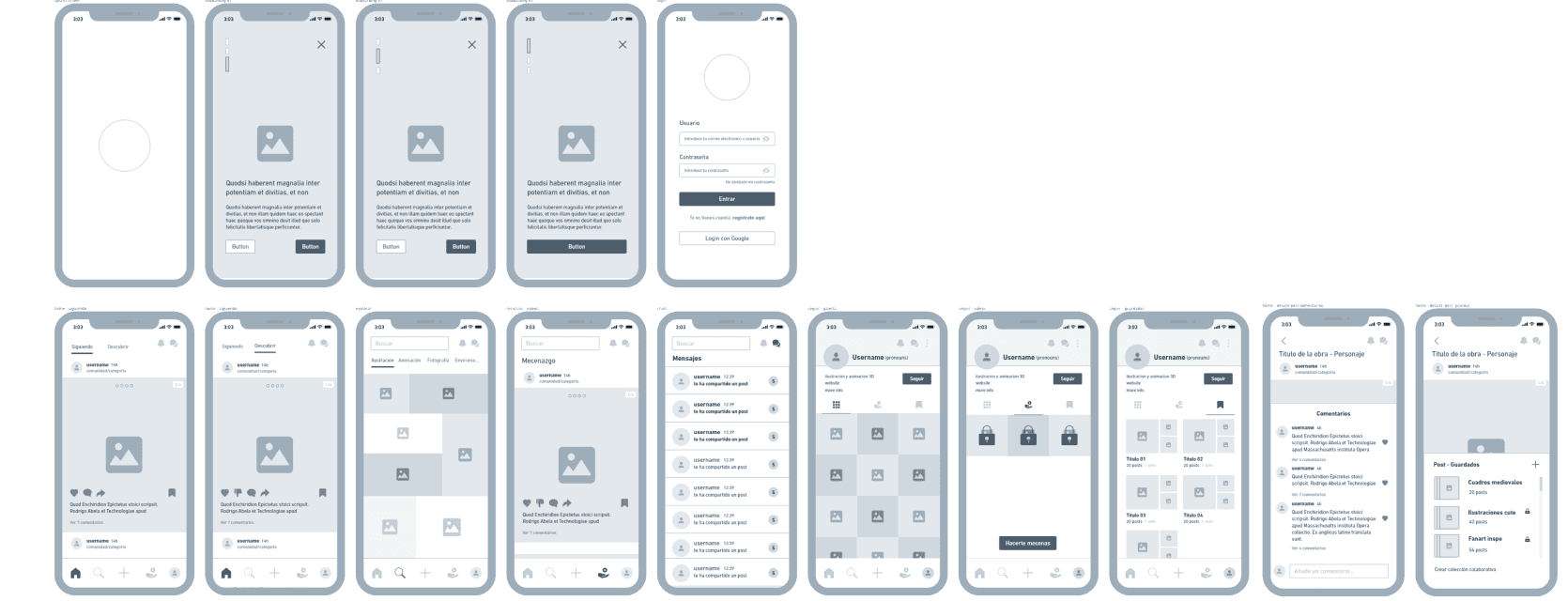
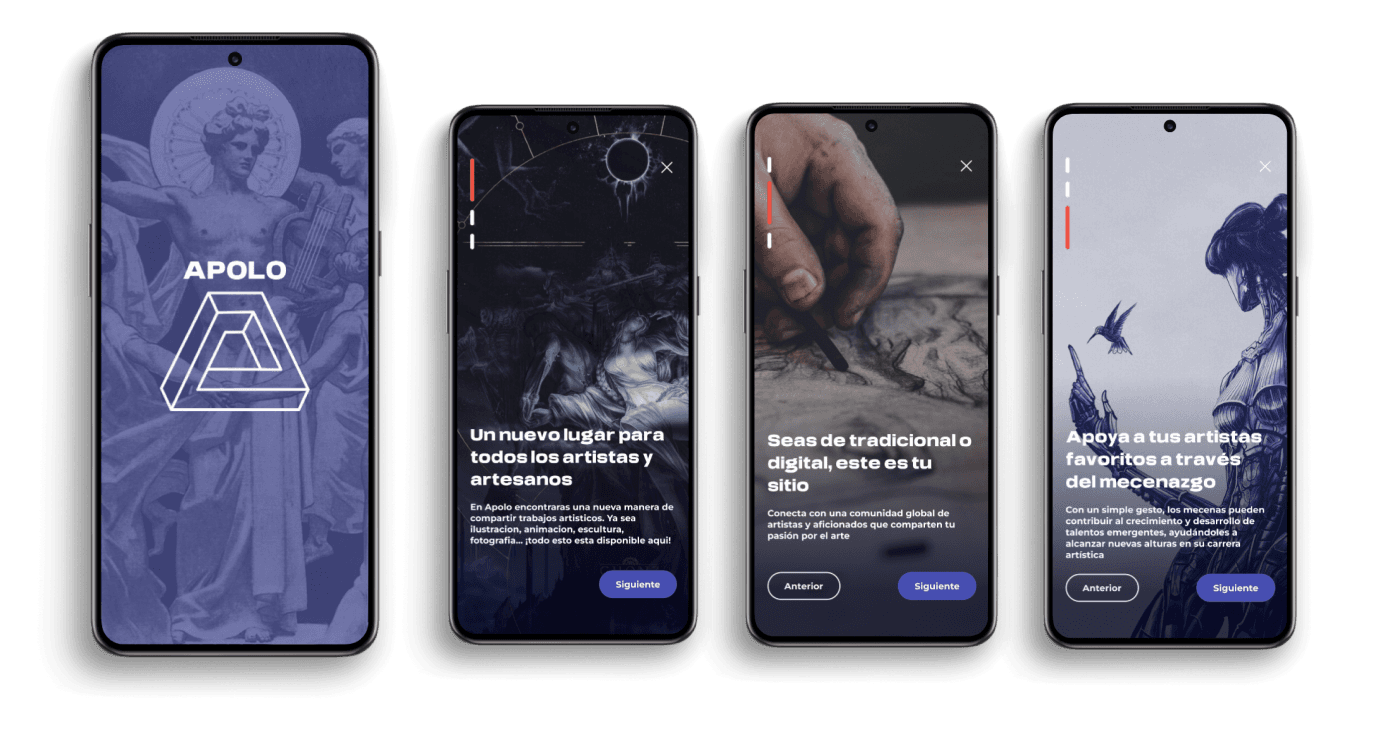
The Onboarding
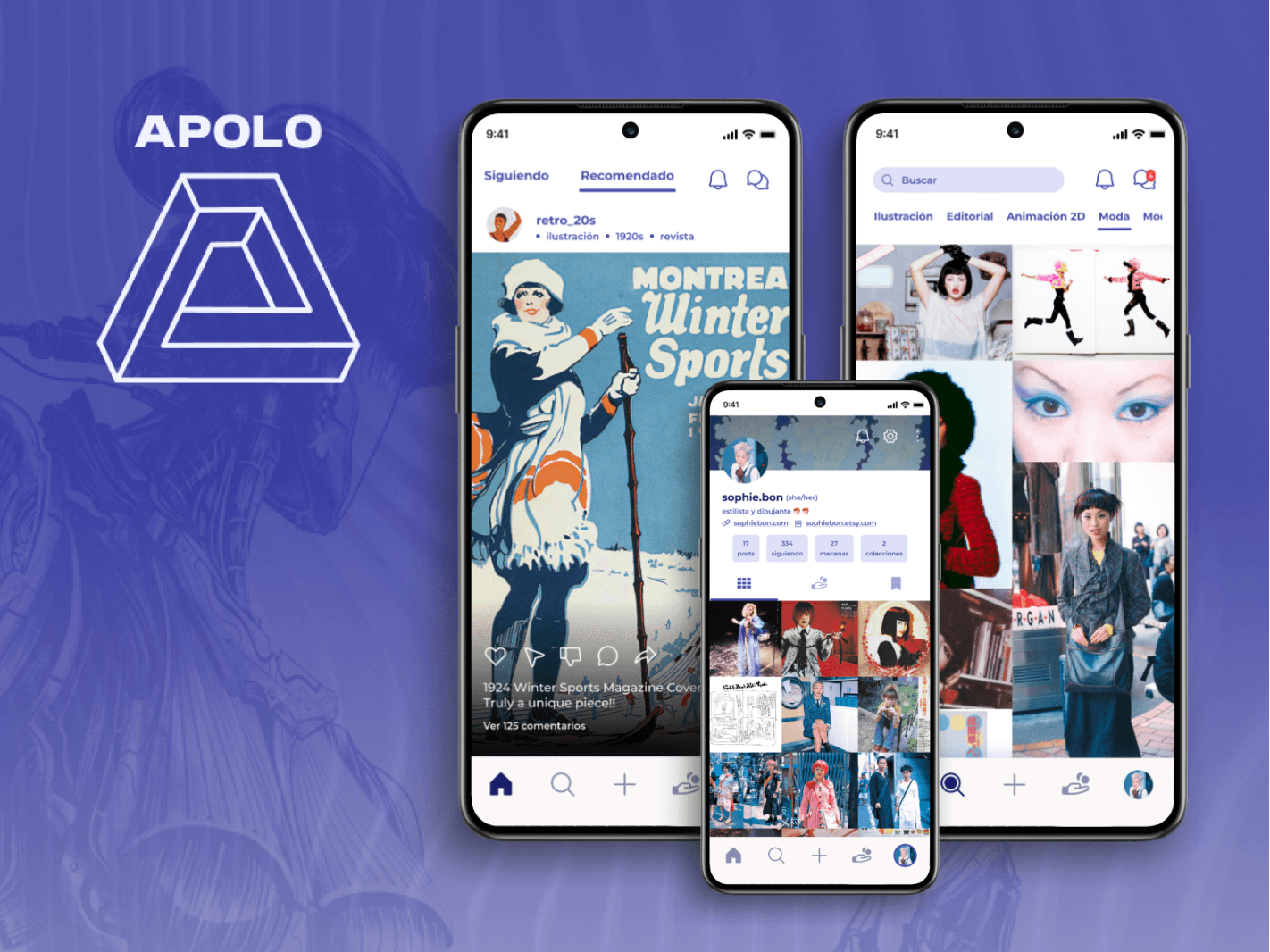
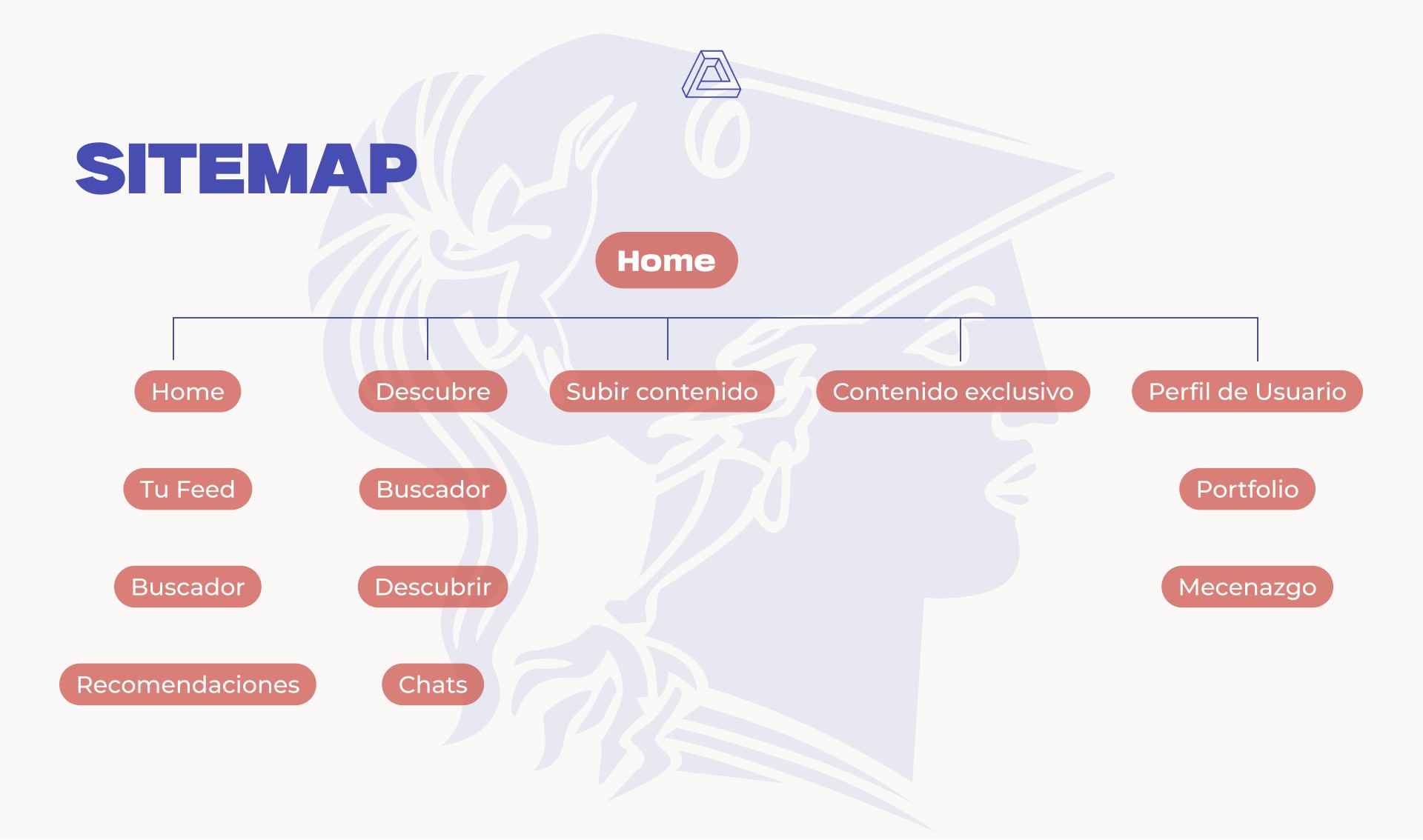
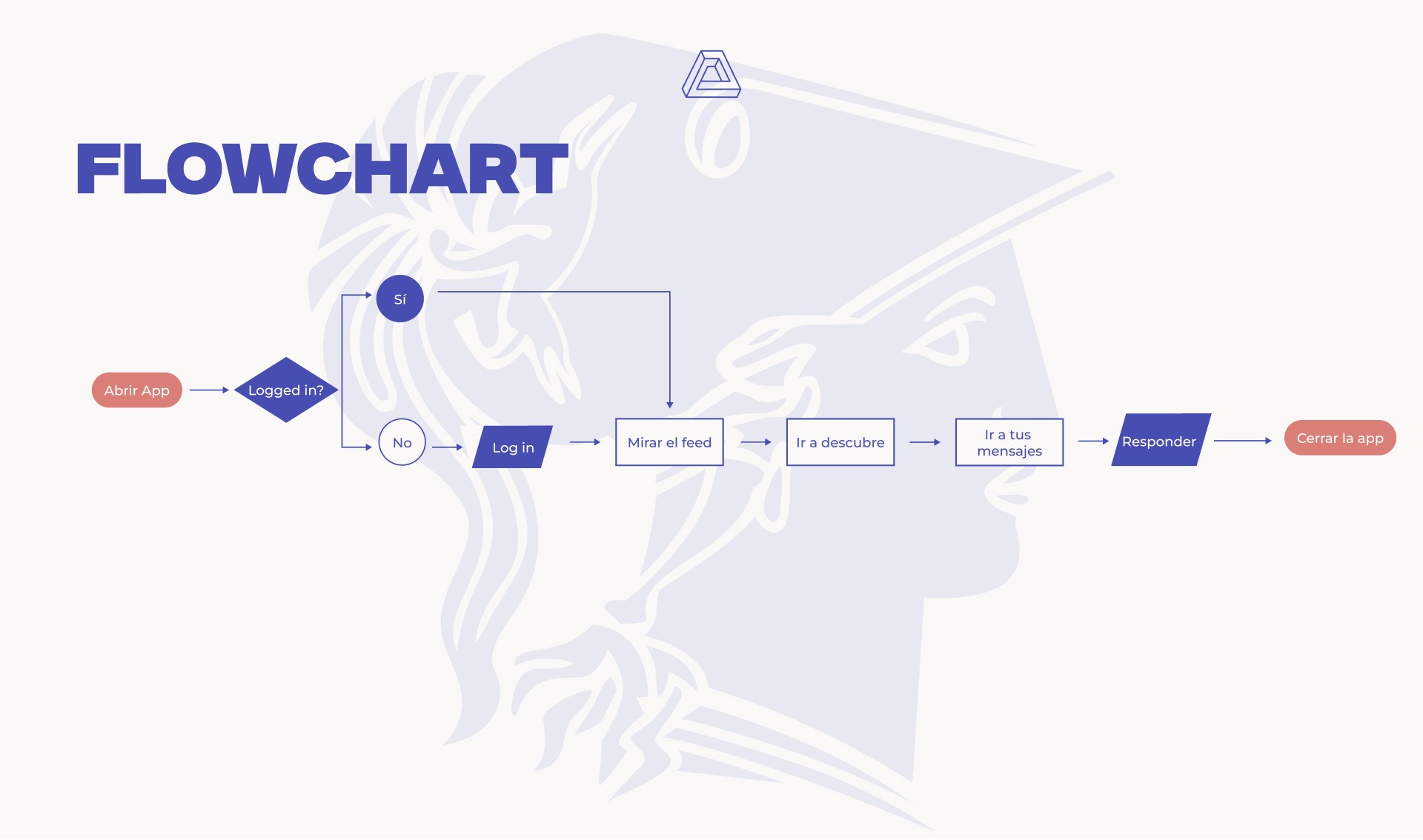
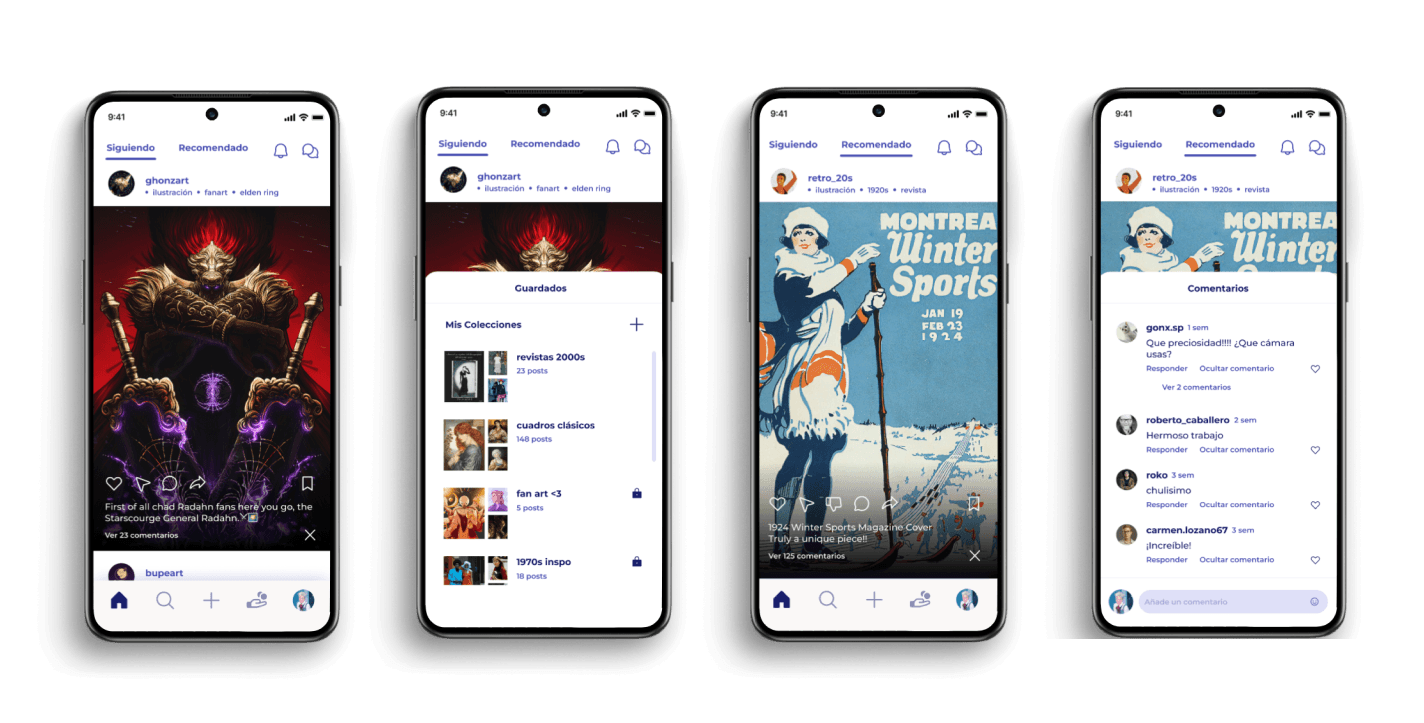
The home screen, with a feed based on people you follow and a 'Recommendation' feed in order to know new artists. I also introduced feedback options such as comments and likes, and the possibility of saving liked posts in private or public folders.
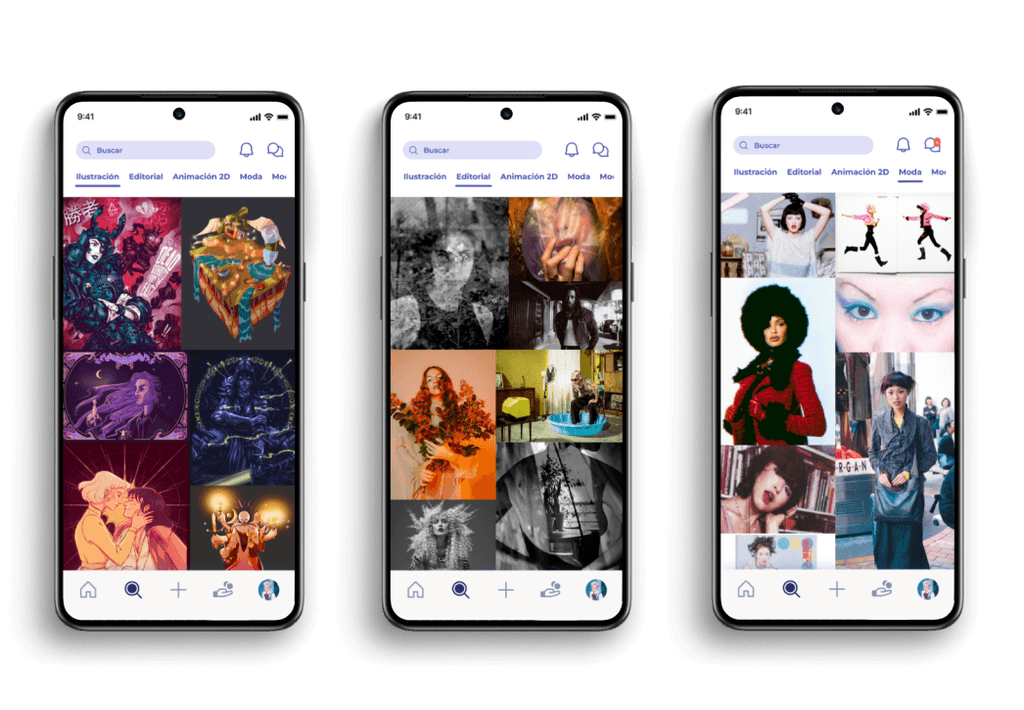
The app also features a 'Discover' screen where new content tailored to your various interests is continuously displayed and organized into categories. This functionality helps emerging and upcoming artists gain visibility and recognition.
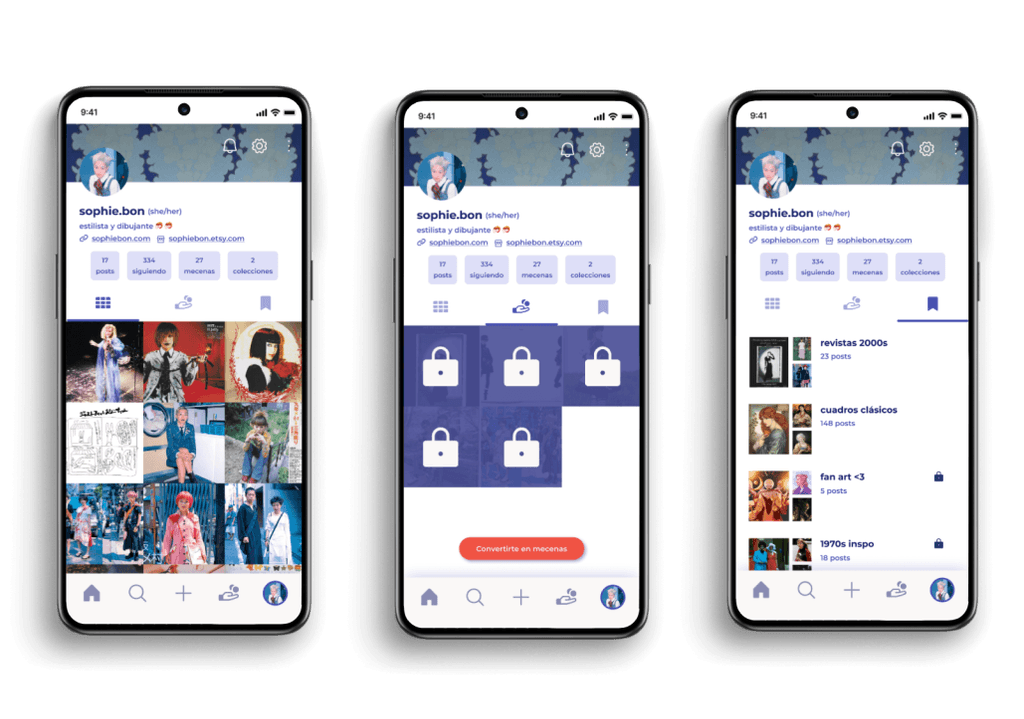
Like many social media sites, the app includes a user section where you can view user information, their uploaded posts, organized folders, and available patronage options.
The patronage system will help connect people who want to financially support artists with those artists who are seeking to make a professional living from their artistic discipline and content.
To successfully launch the app, I designed a desktop-responsive promotional landing page that highlights the most important features of the app. This landing page was meticulously crafted to ensure it effectively showcases the app's key functionalities, providing potential users with a clear understanding of the app's benefits and unique selling points.
By following the Double Diamond methodology, I ensured that Apolo meets the needs of artists and art enthusiasts, providing a platform that not only showcases their work but also fosters community and collaboration.
The result is a comprehensive platform that supports artistic expression and encourages interaction and collaboration within the art community.